what did fisher use to assign at random fertilizer/not to the fields?
This cloth is excerpted from a teaching module on the Visionlearning website, to view this material in context, please visit Data: Statistics.
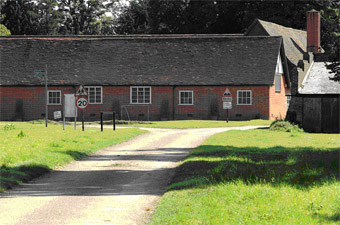
Many people misinterpret statements of likelihood and probability as a sign of weakness or doubtfulness in scientific results. Still, the use of statistical methods and probability tests in research is an of import aspect of scientific discipline that adds forcefulness and certainty to scientific conclusions. For example, in 1843, John Bennet Lawes, an English language entrepreneur, founded the Rothamsted Agriculture Experimental Station in Hertfordshire, England to investigate the bear upon of fertilizer awarding on crop yield. Lawes was motivated to do and then because he had established i of the get-go bogus fertilizer factories a year earlier. For the next 80 years, researchers at the Station conducted experiments in which they applied fertilizers, planted different crops, kept runway of the amount of pelting that barbarous, and measured the size of the harvest at the stop of each growing season. By the turn of the century, the Station had a vast collection of data just few useful conclusions: 1 fertilizer would outperform some other one year only underperform the adjacent, sure fertilizers appeared to impact only certain crops, and the differing amounts of rainfall that fell each yr continually confounded the experiments (Salsburg, 2001). The data were essentially useless because at that place were a big number of uncontrolled variables.
In 1919, the Rothamsted Station hired a young statistician past the proper noun of Ronald Aylmer Fisher to try to make some sense of the information. Fisher's statistical analyses suggested that the relationship between rainfall and plant growth was far more statistically significant than the relationship betwixt fertilizer type and found growth. But the agronomical scientists at the station weren't out to test for weather condition – they wanted to know which fertilizers were most constructive for which crops. No i could remove weather as a variable in the experiments, simply Fisher realized that its effects could essentially be separated out if the experiments were designed appropriately. In order to share his insights with the scientific community, he published two books: Statistical Methods for Enquiry Workers in 1925 and The Design of Experiments in 1935. By highlighting the need to consider statistical assay during the planning stages of research, Fisher revolutionized the practise of science and transformed the Rothamsted Station into a major eye for research on statistics and agriculture, which it however is today.
In The Design of Experiments, Fisher introduced several concepts that take become hallmarks of expert scientific inquiry, including the use of controls, randomization, and replication (Figure iii).
Controls: The utilise of controls is based on the concept of variability. Since any phenomenon has some mensurate of variability, controls let the researcher to measure natural, random, or systematic variability in a like organisation and apply that estimate as a baseline for comparison to the observed variable or phenomenon. At Rothamsted, a control would be a crop that did not receive the application of fertilizer (come across plots labeled I in Figure 3). The variability inherent in establish growth would still produce plants of varying heights and sizes. The command then could provide a mensurate of the bear on that weather or other variables could accept on ingather growth independent of fertilizer awarding, thus allowing the researchers to statistically remove this as a gene.
Randomization: Statistical randomization helps to manage bias in scientific research. Dissimilar the common use of the word random, which implies haphazard or disorganized, statistical randomization is a precise procedure in which units beingness observed are assigned to a treatment or control grouping in a manner that takes into business relationship the potential influence of confounding variables. This allows the researcher to quantify the influence of these confounding variables by observing them in both the command and handling groups. For example, before Fisher, fertilizers were applied along different crop rows at Rothamsted, some of which roughshod entirely along the edge of fields. Still edges are known to affect agricultural yield, and so it was difficult in many cases to distinguish edge effects from fertilizer effects. Fisher introduced a procedure of randomly assigning different fertilizers to different plots within a field in a single year while assuring that non all of the handling (or control) plots for whatever particular fertilizer cruel forth the border of the field (see Figure 3).
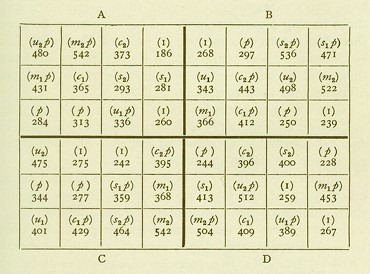
Replication: Fisher as well advocated for replicating experimental trials and measurements such that the range of variability inherently associated with the experiment or measurement could be quantified and the robustness of the results could be evaluated. At Rothamsted this meant planting multiple plots with the same crop and applying the aforementioned fertilizer to each of those plots (run across Effigy 3). Farther, this meant repeating similar applications in different years then that the variability of different fertilizer applications as a part of dissimilar weather condition weather could be quantified. In general, scientists pattern research studies based on the nature of the question they are seeking to investigate, but they refine their research programme in line with many of Fisher's statistical concepts to increase the likelihood that their findings will be useful. The incorporation of these techniques facilitates the analysis and interpretation of data, another place where statistics are used.
Source: https://www.visionlearning.com/en/library/Hidden/59/Statistics-in-research-design/169
0 Response to "what did fisher use to assign at random fertilizer/not to the fields?"
Post a Comment